
 By
By Dental Bridge or Dental Implant: Which Is Better in Dubai?
Choosing a dental bridge or dental implant depends on the condition of your nearby teeth, gums, and jawbone, as well as your budget, preferred treatment time, and ability to maintain the restoration. Neither option is automatically better for every patient.
A traditional dental bridge normally replaces a missing tooth by using the teeth on either side of the gap as supports. A dental implant is placed in the jawbone and supports its own replacement crown without depending on neighbouring teeth.
An implant may be considered when the nearby teeth are healthy and the patient has suitable gum and bone support. A bridge may be practical when the neighbouring teeth already need crowns, the patient wants a shorter treatment process, or implant surgery is not suitable.
The decision should be made after a dental examination and appropriate imaging. Online comparisons can explain the differences, but they cannot show which option is suitable for an individual mouth.
Medical note: This article provides general dental education for people in Dubai and the UAE. It does not replace a dental examination, imaging, diagnosis or personalised treatment plan from a qualified dentist.
Dental Bridge vs Dental Implant at a Glance
The following table explains the general differences between a traditional dental bridge and a single-tooth dental implant.
| Comparison | Dental Bridge | Dental Implant |
|---|---|---|
| Main support | Usually supported by nearby teeth | Supported by the jawbone |
| Treatment area | Involves the gap and supporting teeth | Mainly replaces the missing tooth |
| Surgery | Usually does not require implant surgery | Requires surgical implant placement |
| Treatment time | Often shorter | Usually longer because healing is needed |
| Jawbone requirement | Does not require an implant site | Requires suitable bone for implant placement |
| Nearby teeth | May need reshaping for crowns | Usually does not require reshaping nearby teeth |
| Initial cost | May be lower in some cases | Often has a higher initial cost |
| Cleaning | Cleaning is needed beneath the bridge | Cleaning is needed around the implant and crown |
| Main suitability factor | Strength of supporting teeth and gums | Bone, gum health, healing and medical suitability |
These are general differences. The right treatment depends on a clinical assessment, not only on price or treatment time.
What Is a Dental Bridge?
A dental bridge is a fixed restoration used to replace one or more missing teeth. A traditional bridge usually contains an artificial tooth attached to crowns placed over the teeth beside the gap.
The supporting teeth are prepared so the crowns can fit over them. The artificial tooth then fills the space between those supporting crowns.
How Does a Bridge Replace a Missing Tooth?
For a traditional bridge, the dentist generally examines the supporting teeth, prepares them, takes an impression or digital scan, and fits a temporary bridge while the final restoration is made.
The final bridge is then checked for fit, appearance, and bite before it is secured in place.
Because the bridge relies on nearby teeth, those teeth must be strong enough to support the restoration. Their roots, fillings, crowns, gums, and bone support may all affect the decision.
When May a Dental Bridge Be Considered?
A bridge may be considered when:
- one or more teeth are missing;
- The teeth beside the gap are strong enough to support crowns;
- nearby teeth already need significant restorative treatment;
- The patient prefers to avoid implant surgery;
- Bone support for an implant is limited;
- medical or healing factors make implant treatment less suitable;
- a shorter treatment process is preferred;
- The patient understands how to clean beneath the bridge.
A bridge should not be recommended simply because it is faster. The dentist must also consider the long-term condition of the supporting teeth.
What Is a Dental Implant?
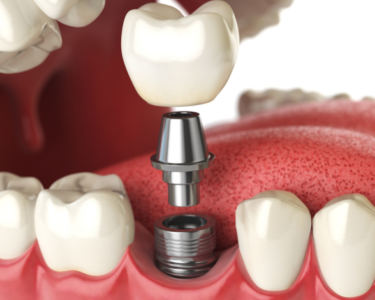
A dental implant is an artificial tooth root placed into the jawbone. After the implant becomes stable, it can support an abutment and replacement crown.
Unlike a traditional bridge, a single implant generally does not need the neighbouring teeth to act as supports.
How Does an Implant Support a Replacement Tooth?
Implant treatment usually begins with an examination and imaging to assess the area around the missing tooth, gums, bone, and nearby structures.
The implant is placed into the jawbone. It then needs time to heal and become stable before the final crown is fitted. Some cases may involve extra stages, such as extraction, bone grafting, or temporary tooth replacement.
For a full explanation of these stages, read how long the dental implant process takes.
When May a Dental Implant Be Considered?
A dental implant may be considered when:
- a tooth is missing or cannot be restored;
- The nearby teeth are healthy;
- The patient wants to avoid using neighbouring teeth as bridge supports;
- suitable jawbone is available;
- gum health is stable;
- active infection has been treated;
- The patient is medically suitable for surgery and healing;
- The patient can maintain good oral hygiene;
- The patient accepts the longer treatment process and cost.
Not every missing tooth requires an implant. The dentist should also explain bridges, removable options, and whether the gap needs to be replaced at all.
What Is the Main Difference Between a Bridge and an Implant?
The main difference is where the replacement tooth receives its support.
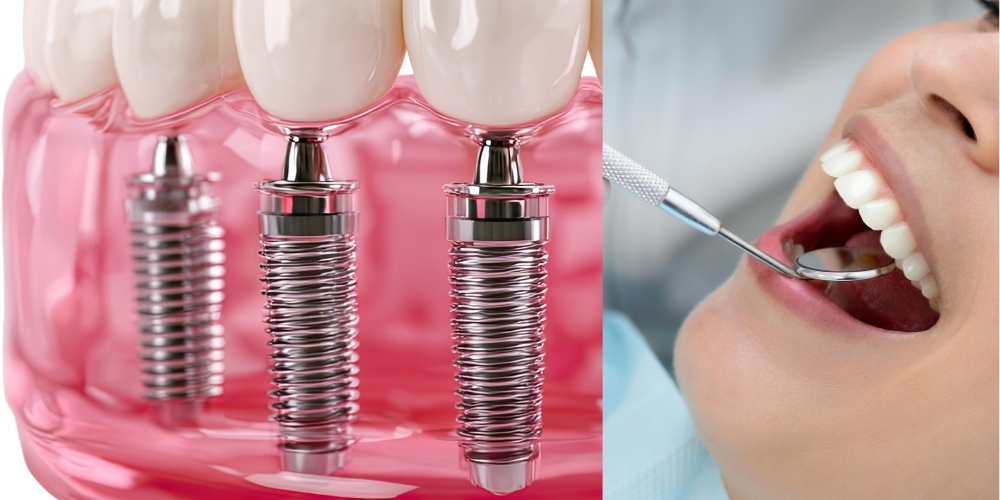
A traditional bridge is normally supported by teeth beside the gap. An implant-supported crown receives its support from an implant placed in the jawbone.
Support From Teeth Versus Support From Bone
With a bridge, the condition of the supporting teeth is important because they carry the restoration. If one supporting tooth later develops decay, fractures, or loses gum support, the bridge may also be affected.
With an implant, the neighbouring teeth are not normally used to support the replacement crown. However, the implant depends on healthy surrounding bone and gum tissue.
Neither support method is risk-free. The dentist must decide which structure provides the most suitable foundation for the patient.
Effect on Nearby Teeth
A traditional bridge normally requires the supporting teeth to be reshaped for crowns. This may be reasonable when those teeth already have large fillings, fractures, or crowns.
If the neighbouring teeth are healthy and untouched, an implant may allow them to remain unprepared. However, this advantage does not override other concerns such as insufficient bone, active gum disease, surgery risks, or healing problems.
Which Option Costs More in Dubai?
A dental implant usually has a higher initial cost than a traditional bridge, but the exact comparison depends on the number of teeth involved, materials, scans, additional procedures, and what is included in each quotation.
A bridge quote may include several connected crowns, while an implant quote may include the implant, abutment, and final crown as separate items.
Initial Price Versus Complete Treatment Cost
Before comparing two prices, ask whether each quote includes:
- consultation;
- X-rays or CBCT imaging;
- tooth extraction, if required;
- temporary replacement tooth;
- preparation of supporting teeth;
- implant placement;
- bone grafting, if required;
- abutment;
- final crown or bridge;
- follow-up visits;
- maintenance;
- Possible repairs.
For a detailed implant price guide, read dental implant cost in Dubai.
A lower starting price does not automatically mean a lower complete cost. Compare the full written treatment plans rather than the advertised starting fees.
Which Treatment Takes Longer?
A traditional bridge can often be completed sooner because it does not require an implant to heal within the jawbone. Implant treatment generally takes longer and may involve more stages.
Dental Bridge Timeline
A bridge process may include:
- examination and imaging;
- assessment of the supporting teeth;
- preparation of the supporting teeth;
- impressions or digital scans;
- temporary bridge placement;
- creation of the final bridge;
- Final fitting and bite adjustment.
The exact timing depends on the condition of the supporting teeth and whether they require additional treatment first.
Dental Implant Timeline
An implant process may include:
- examination and three-dimensional imaging;
- tooth extraction, if needed;
- infection or gum treatment;
- bone grafting, if needed;
- implant placement;
- healing and integration;
- abutment placement;
- Final crown fitting.
This process may take several months in many cases. The timing differs according to healing, bone condition, and any extra procedures required.
Read how long the dental implant process takes for a detailed stage-by-stage explanation.
Which Option Is Better if the Nearby Teeth Are Healthy?
When the teeth beside the gap are healthy and do not need crowns, an implant may have the advantage of replacing the missing tooth without preparing those teeth.
Preserving Nearby Teeth
A traditional bridge may require healthy tooth structure to be removed from both supporting teeth. An implant-supported crown usually stands independently and does not need those teeth for support.
However, preserving nearby teeth is only one part of the decision. An implant may still be unsuitable if the patient has:
- insufficient jawbone;
- uncontrolled gum disease;
- active infection;
- medical concerns affecting healing;
- a high surgical risk;
- difficulty maintaining the implant;
- Limited space for safe placement.
The dentist should compare the health of the neighbouring teeth with the condition of the proposed implant site.
Which Option Is Better if Nearby Teeth Need Crowns?
A bridge may be a practical option when the teeth beside the gap already need crowns because of large fillings, fractures, wear, or other damage.
When a Bridge May Be Practical
If the neighbouring teeth already require extensive restoration, using them as bridge supports may address the missing tooth and restore those teeth within one connected treatment.
This does not mean every heavily filled tooth is a suitable bridge support. The dentist must assess the root, remaining tooth structure, gum support, and expected ability to carry additional load.
If the supporting teeth are weak or have a poor outlook, relying on them for a bridge may not be advisable.
What if There Is Bone Loss or Gum Disease?
Both bridges and implants require healthy supporting tissues. An implant needs suitable jawbone and stable gums, while a bridge needs healthy supporting teeth and adequate gum and bone support around those teeth.
Implant Suitability
Bone loss may affect whether an implant can be placed safely and supported properly. Some patients may need bone grafting, while others may be advised to consider another treatment.
Active gum disease should generally be assessed and managed before implant treatment. Smoking, diabetes control, oral hygiene, and medical history may also influence healing and long-term care.
Bridge Suitability
A bridge does not remove the need for healthy gums and bone. If the supporting teeth have severe gum disease, bone loss, or mobility, they may not provide a suitable foundation.
Any active tooth infection should also be assessed before a final restoration is planned.
Read how to tell if a tooth is infected if you have pain, swelling, pus, a bad taste, or other warning signs.
For information about spreading infection, read what is a tooth abscess and how serious is it?.
Dental Bridge and Implant Maintenance
Both treatments need daily cleaning and regular dental care. Neither should be treated as a replacement that can be ignored after fitting.
Partial Dentures vs Full Dentures: What Is the Difference?
If you’re wondering, “Partial Dentures vs Full Dentures: What Is the Difference?”, the main distinction is the number of teeth being replaced. Partial dentures are designed for patients who still have some natural teeth remaining, while full dentures replace an entire upper or lower arch when all teeth are missing. Both options can restore appearance and chewing function, but the best choice depends on the extent of tooth loss and individual dental needs.
Cleaning Under a Dental Bridge
Food and plaque can collect beneath the artificial tooth in a bridge. A normal toothbrush may not fully clean this area.
A dentist or hygienist may recommend:
- floss threaders;
- bridge floss;
- interdental brushes;
- a water-based cleaning device;
- professional cleaning appointments.
Supporting teeth can still develop decay or gum problems. Cleaning beneath the bridge is therefore an important part of protecting the restoration.
Cleaning Around a Dental Implant
A dental implant cannot develop tooth decay, but plaque and inflammation can affect the gum and bone around it.
Cleaning may include:
- brushing around the implant crown;
- interdental brushes;
- floss or another implant-safe cleaning aid;
- cleaning below the gum-side edge of the crown;
- regular implant reviews;
- Professional maintenance.
Contact a dentist if an implant becomes painful, loose, or difficult to clean, or if bleeding, swelling, or pus develops around it.
What Are the Possible Risks of a Dental Bridge?
A dental bridge may provide useful fixed tooth replacement, but it has possible disadvantages and complications.
Dental Bridge Risks and Limitations
Possible concerns include:
- removal of tooth structure from supporting teeth;
- decay beneath the supporting crowns;
- gum inflammation;
- difficulty cleaning beneath the bridge;
- fracture or loosening of the restoration;
- damage to a supporting tooth;
- Root canal treatment becomes necessary in a supporting tooth;
- loss of gum or bone support;
- Need to replace the whole bridge if one part fails.
These risks do not mean bridges should be avoided. They should be explained as part of informed treatment planning.
What Are the Possible Risks of a Dental Implant?
Dental implant treatment also has possible risks and limitations.
Dental Implant Risks and Limitations
Possible concerns include:
- infection;
- delayed healing;
- failure of the implant to integrate with the bone;
- gum inflammation around the implant;
- bone loss;
- movement or loss of the implant;
- nerve or sinus complications in certain cases;
- loosening or fracture of the crown or implant components;
- need for bone grafting;
- longer treatment time;
- surgical and anaesthetic considerations.
A dentist should explain the risks relevant to the individual patient rather than offering a general guarantee.
Which Option May Last Longer?
It is not possible to promise that every bridge or implant will last for a fixed number of years. The outcome depends on the treatment design, oral hygiene, bite, supporting tissues, health, and maintenance.
Factors Affecting a Bridge
A bridge may be affected by:
- decay in supporting teeth;
- gum disease;
- fracture of a supporting tooth;
- heavy biting or grinding;
- bridge material;
- cleaning beneath the restoration;
- maintenance appointments.
Factors Affecting an Implant
An implant may be affected by:
- bone and gum health;
- healing;
- implant position;
- bite pressure;
- teeth grinding;
- smoking;
- medical conditions;
- oral hygiene;
- crown or component wear;
- maintenance appointments.
Rather than choosing treatment based on a promised lifespan, ask the dentist about the likely outlook in your own mouth.
Are Dental Implants Worth the Extra Cost?
A dental implant may be worth the higher initial cost for a suitable patient who wants to avoid preparing healthy neighbouring teeth and accepts the surgery, healing time, and maintenance involved.
It may not provide better value when the patient is not clinically suitable or when neighbouring teeth already need crowns and can provide sound bridge support.
Read are dental implants worth the cost? For a fuller discussion of value, suitability, and long-term care.
What if Several or All Teeth Are Missing?
A traditional single-tooth bridge and a single implant are not the only options when several teeth are missing.
Depending on the number and position of missing teeth, treatment might include:
- a longer tooth-supported bridge;
- several individual implants;
- an implant-supported bridge;
- a partial denture;
- a full denture;
- full-arch implant treatment.
Patients replacing many teeth can read about full mouth dental implants cost in Dubai.
For full-arch implant options, read All-on-4 vs All-on-6 implants.
Questions to Ask Before Choosing a Bridge or Implant
Ask for a written explanation of the recommended treatment, alternatives, and full cost.
Useful questions include:
- Can the missing-tooth area support an implant?
- Are my gums healthy?
- Do I have enough jawbone?
- Will I need bone grafting?
- Are the nearby teeth healthy?
- Do the nearby teeth already need crowns?
- How much tooth structure would be removed for a bridge?
- How long will each option take?
- What temporary tooth will I have during treatment?
- What is included in each quote?
- How should I clean the restoration?
- What maintenance appointments will I need?
- What problems may require repair or replacement?
- What happens if a supporting tooth or implant develops a problem?
- Is leaving the space untreated a reasonable option?
- Are removable options suitable for me?
A patient should have enough information to compare treatments without being pressured into selecting the most expensive or fastest option.
Frequently Asked Questions About a Dental Bridge or Dental Implant
Is a dental implant better than a bridge?
Not for every patient. An implant may avoid preparing healthy nearby teeth, while a bridge may be practical when those teeth already need crowns or implant surgery is unsuitable. The better option depends on the individual mouth.
Is a bridge cheaper than an implant in Dubai?
A traditional bridge may have a lower initial cost than an implant in some cases. The complete cost depends on the number of crowns, materials, scans, implant components, and any additional treatment required.
Which option usually takes less time?
A bridge is often completed sooner because it does not require an implant-healing period. Implant treatment may take several months, especially when extraction or bone grafting is required.
Does a dental bridge damage nearby teeth?
A traditional bridge normally requires the nearby supporting teeth to be reshaped for crowns. This removes some tooth structure, but it may be reasonable when those teeth already need substantial restoration.
Can I get a dental implant if I have bone loss?
Some patients with bone loss may still be considered for an implant, but they may need grafting or another treatment plan. Examination and imaging are required before suitability can be confirmed.
Is a bridge suitable for one missing tooth?
Yes, a bridge may be used for one missing tooth when the neighbouring teeth and gums can provide suitable support. An implant or removable option may also be considered.
Can a bridge be replaced with an implant later?
It may be possible in some cases, but the dentist must assess the supporting teeth, the missing-tooth space, the jawbone, and the gums. Bone loss or changes to the neighbouring teeth may affect the available options.
Can an implant develop a cavity?
The implant itself cannot develop a cavity, but the crown can be damaged, and the gum and bone around the implant can become inflamed or infected. Daily cleaning and maintenance remain necessary.
What happens if I do not replace a missing tooth?
The effects differ between patients. Nearby teeth may move, the opposing tooth may change position, and chewing may be affected. In some situations, leaving the gap may be reasonable. A dentist should assess the location and bite before recommending treatment.
Final Thoughts: Dental Bridge or Dental Implant?
A dental bridge and a dental implant can both replace a missing tooth, but they receive support in different ways. A traditional bridge normally uses neighbouring teeth, whereas an implant supports an artificial tooth.
An implant may be worth considering when the neighbouring teeth are healthy, and the patient has suitable gums, bone, and healing capacity. A bridge may be practical when nearby teeth already need crowns, the patient wants a shorter treatment process, or implant surgery is not suitable.
The best choice should be based on the condition of the whole mouth rather than one advantage, an advertised price, or a promise about lifespan. Ask for a written comparison covering treatment stages, costs, risks, maintenance, and alternatives before making a decision.