
 By
By Many patients are not sure who should perform their root canal. Should they visit a general dentist, an endodontist, or an emergency dentist? The answer depends on the tooth, the pain level, the infection, and how complex the case is.
A general dentist can perform many root canal treatments, especially simple cases. An endodontist is a dentist who focuses on diagnosing tooth pain and treating the inside of the tooth. Complex molars, failed root canals, retreatment cases, curved canals, severe infection, and difficult tooth pain may need an endodontist.
In Dubai, patients should also check that the dentist or clinic is properly licensed. Dubai Health Authority lists dental policies and guidelines for several dental areas, including endodontics, infection control, dental radiology, restorative dentistry, implant dentistry, orthodontics, and pediatric dentistry.
This guide explains what type of dentist performs root canals, when you may need a specialist, what to ask before treatment, and how Dubai patients can choose the right dentist.
This content is for general education only. It does not replace a dental examination or personal advice from a licensed dentist.
Quick Answer: Who Performs Root Canal Treatment?
A general dentist may perform simple root canals. This may include front teeth, straightforward premolars, and cases without severe infection or unusual canal shape.
An endodontist may be recommended for complex root canals. This may include molars, retreatment, missed canals, blocked canals, curved canals, cracked tooth concerns, facial swelling, persistent pain, or failed previous root canal treatment.
If you are still unsure whether you need this treatment, read do I need a root canal or filling.
Can a General Dentist Perform a Root Canal?
Yes, many general dentists perform root canal treatment.
A general dentist may treat simple or moderate cases when the tooth is easy to access, the canals are not very complex, and there is no major complication.
General dentists commonly handle:
Front tooth root canals.
Some premolar root canals.
Early infection cases.
Straightforward cavity-related nerve pain.
Cases where the tooth is restorable.
However, every tooth is different. A front tooth may be simple, but a molar can have several canals and more complex anatomy. If the dentist feels the case needs specialist care, they may refer you to an endodontist.
To understand the procedure itself, read what happens during a root canal.
What Is an Endodontist?
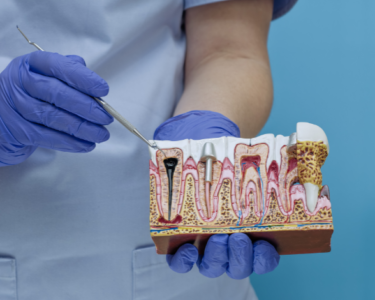
An endodontist is a dentist who focuses on problems inside the tooth, especially the pulp, root canals, and tissues around the root.
Endodontists commonly treat:
Tooth nerve pain.
Root canal treatment.
Root canal retreatment.
Dental abscess linked to the root.
Complex canal anatomy.
Cracked tooth diagnosis.
Dental trauma involving the pulp.
Persistent pain after dental treatment.
The American Association of Endodontists explains that endodontists are dental specialists who focus on saving natural teeth through procedures involving the soft inner tissue of the tooth, known as the pulp.
In simple words, an endodontist is often the specialist you see when tooth pain is difficult, the root canal is complex, or a previous root canal has failed.
When Should You See an Endodontist?
You may need an endodontist when the case is more complicated than a routine root canal.
A dentist may recommend an endodontist for:
Molar root canal treatment.
Curved canals.
Blocked canals.
Narrow canals.
Retreatment after a failed root canal.
Missed canal concerns.
Severe infection.
Facial swelling.
Persistent pain after treatment.
Cracked tooth concerns.
Dental trauma.
Complex dental history.
Pain that is hard to diagnose.
Molars often need more detailed care because they are at the back of the mouth and usually have more canals. Retreatment cases are also more complex because the old root filling material has to be removed before the tooth can be cleaned again.
If you have swelling after root canal treatment, read facial swelling after a root canal.
Can an Emergency Dentist Perform a Root Canal?
Yes, an emergency dentist can often start or complete root canal treatment if the case is suitable.
Emergency dentists may treat patients with severe tooth pain, swelling, pus, or infection. In some cases, the dentist may open the tooth, remove infected tissue, drain infection if needed, and place a temporary filling. The full treatment may be completed later.
If the case is complex, the emergency dentist may first control pain and infection, then refer the patient to an endodontist.
Emergency care may be needed if you have:
Severe toothache.
Pain that keeps you awake.
Swelling in the gum or face.
Pus or bad taste.
A gum pimple.
Fever with tooth pain.
Pain when biting.
If symptoms are urgent, read emergency root canal treatment.
General Dentist vs Endodontist: What Is the Difference?
| Factor | General Dentist | Endodontist |
|---|---|---|
| Main role | General dental care | Root canal and tooth pulp specialist care |
| Common cases | Simple root canals, fillings, crowns, checkups | Complex root canals, retreatment, persistent tooth pain |
| Tooth types | Often front teeth and simple premolars | Molars, curved canals, failed cases, complex infections |
| Referral needed? | Usually first point of care | May be referred by a general dentist |
| Cost | Often lower for simple cases | May cost more due to specialist care |
| Best for | Routine dental treatment | Difficult root canal cases |
Both can play an important role. The right choice depends on the diagnosis.
Does Choosing an Endodontist Cost More in Dubai?
Specialist care may cost more than a simple root canal with a general dentist. The final cost depends on the tooth type, number of canals, infection level, X-rays, clinic location, dentist experience, and whether a crown is needed.
A molar root canal or retreatment case may cost more because it takes more time and skill. A simple front tooth root canal may cost less.
Cost should not be the only deciding factor. A poorly diagnosed or incomplete root canal may need retreatment later, which can cost more.
For a full price guide, read root canal cost in Dubai.
How Does a Dentist Decide If You Need a Root Canal?
A dentist will not decide based only on pain. They usually check the tooth and take an X-ray.
The dentist may use:
Dental examination.
X-ray.
Cold test.
Tapping test.
Bite test.
Gum check.
Crack assessment.
Swelling check.
Review of old fillings or crowns.
The goal is to find out whether the tooth pulp is healthy, inflamed, infected, or dead.
If the decay or damage has not reached the pulp, a filling may be enough. If the pulp is infected or badly inflamed, root canal treatment may be needed.
Read more here: do I need a root canal or filling.
What Should You Ask Before Root Canal Treatment in Dubai?
Before starting treatment, ask clear questions. This helps you understand the plan and avoid confusion later.
Ask your dentist:
Is this a simple or complex root canal?
How many canals does this tooth have?
Do I need a general dentist or endodontist?
Will an X-ray be taken before and after treatment?
Is CBCT needed?
Will a dental dam be used?
Is the tooth restorable?
Will I need a crown after treatment?
Is the crown included in the price?
How many visits may be needed?
What symptoms should I watch for after treatment?
What should I do if swelling appears?
What is the full estimated cost?
These questions help you compare clinics properly, not only by price.
How to Check If a Dentist Is Licensed in Dubai
In Dubai, healthcare professionals need proper registration or licensing before practicing through a healthcare facility. DHA’s registration service says registration confirms that a healthcare professional fulfills the requirements for the applied position and allows the professional to become part of the Dubai Medical Registry, after which a healthcare facility activates it into a license to practice.
Before treatment, you can ask the clinic about the dentist’s license, professional title, and experience with root canal cases.
For general dentist selection tips, read how to choose the right dentist in Dubai.
Why Infection Control Matters During Root Canal Treatment
Root canal treatment involves cleaning inside the tooth. Infection control matters because bacteria must be reduced as much as possible during treatment.
DHA’s clinical guidelines for infection control in dentistry state that dental clinics should prioritize infection prevention and follow standard precautions and infection prevention recommendations.
A good clinic should follow safe sterilization, proper isolation, clean instruments, and infection control protocols.
This is one reason patients should not choose a clinic based only on the lowest advertised price.
How to Choose the Right Root Canal Dentist in Dubai
When choosing a dentist for root canal treatment, look for proper diagnosis, clear communication, transparent pricing, and follow-up care.
A good choice may include:
A licensed dentist or endodontist.
Clear explanation of your tooth condition.
X-ray-based diagnosis.
Experience with similar cases.
Proper infection control.
Clear cost estimate.
Honest explanation about crown needs.
Follow-up instructions.
Emergency support if symptoms worsen.
Referral to a specialist when needed.
For more help, read how to choose the right dentist in Dubai.
What If Pain Continues After Root Canal Treatment?
Some soreness after treatment can be normal. But pain should slowly improve.
If pain continues, becomes worse, or returns later, the dentist may check for:
High bite.
Remaining infection.
Missed canal.
Cracked tooth.
Leaking filling or crown.
Need for retreatment.
Gum-related pain.
If symptoms appear after treatment, read signs of infection after a root canal.
For healing expectations, read root canal recovery time.
Related Root Canal Guides
What happens during a root canal
Root canal cost in Dubai
Emergency root canal treatment
Do I need a root canal or filling
Root canal recovery time
Signs of infection after a root canal
Facial swelling after a root canal
How to choose the right dentist in Dubai. Can an emergency dentist perform a root canal in Dubai? How many appointments does a root canal take in Dubai?
FAQs About Dentists Who Perform Root Canals
What type of dentist does root canals?
General dentists can perform many simple root canals. Endodontists treat more complex root canal cases, including molars, retreatment, curved canals, failed root canals, and difficult tooth pain.
Can a normal dentist do a root canal?
Yes, many general dentists can do root canal treatment, especially simple cases. If the tooth is complex, the dentist may refer you to an endodontist.
When do I need an endodontist?
You may need an endodontist if you have a molar root canal, curved canals, blocked canals, retreatment, failed root canal, severe infection, swelling, or pain that is hard to diagnose.
Is an endodontist better for molar root canals?
An endodontist may be recommended for molars because molars often have more canals and more complex anatomy. However, some general dentists also treat molars depending on their experience.
Can an emergency dentist do root canals?
Yes, many emergency dentists can start or complete root canal treatment. If the case is complex, they may stabilize the tooth and refer you to an endodontist.
Is an endodontist more expensive in Dubai?
Endodontist treatment may cost more because it is specialist care. The price also depends on tooth type, infection level, X-rays, clinic location, and whether a crown is needed.
How do I know if my root canal is complex?
A root canal may be complex if it involves a molar, curved canals, blocked canals, retreatment, swelling, failed previous treatment, cracks, or pain that is hard to diagnose.
Can a failed root canal be fixed?
Sometimes, yes. A failed root canal may be treated with retreatment, apical surgery, crown replacement, or other care. If the tooth is cracked or badly damaged, extraction may be needed.
Should I choose a specialist for root canal retreatment?
Root canal retreatment is often more complex than first-time treatment, so an endodontist may be a better option, especially for molars or failed previous treatment.
How do I check if a dentist is licensed in Dubai?
You can ask the clinic for the dentist’s professional title and license details. Dubai healthcare professionals should be registered or licensed through the relevant Dubai healthcare authority system before practicing.
Final Advice
A general dentist can perform many root canals, but not every case is simple. If the tooth is a molar, previously treated, badly infected, swollen, cracked, or painful after treatment, an endodontist may be recommended.
For Dubai patients, the safest approach is to choose a licensed dental professional, ask clear questions, understand whether the case is simple or complex, and make sure the treatment plan includes proper diagnosis, cost clarity, restoration planning, and follow-up care.