

 By
By Tooth pain can be confusing. Sometimes a simple filling is enough. Other times, the tooth may need root canal treatment because the decay, crack, or infection has reached the nerve inside the tooth.
A filling is usually used when tooth decay is limited to the outer tooth structure. A root canal is usually needed when the pulp inside the tooth becomes infected or inflamed. The American Association of Endodontists explains that root canal treatment is needed when there is inflammation or infection in the roots of a tooth, and the dentist removes the pulp, cleans and disinfects the canals, then seals the space.
This guide explains the difference between a filling and root canal, the symptoms to watch for, how dentists decide, what Dubai patients should expect, and when tooth pain becomes urgent.
This content is for general education only. It does not replace a dental examination or personal advice from a licensed dentist.
Quick Answer: How Do You Know If You Need a Filling or Root Canal?
A filling may be enough if the decay is small or moderate and has not reached the tooth nerve. You may have a small cavity, mild sensitivity, food getting stuck, or a visible dark spot on the tooth.
A root canal may be needed if the decay, crack, or infection reaches the pulp. Signs may include severe toothache, lingering hot or cold sensitivity, pain at night, pain when biting, swelling, pus, bad taste, or a gum pimple.
A dentist cannot confirm this by symptoms alone. You usually need an examination and X-ray.
What Is the Difference Between a Filling and a Root Canal?
A filling treats tooth decay before the inside nerve tissue is badly affected. The dentist removes the decayed part of the tooth and fills the cavity with a dental material.
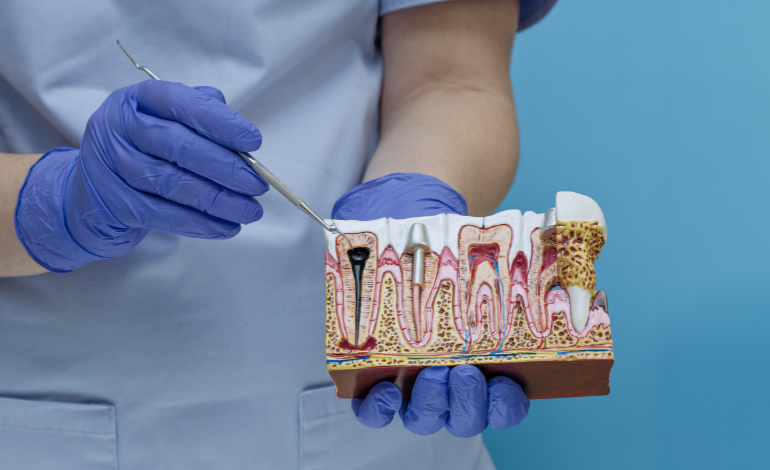
A root canal treats the inside of the tooth. The dentist removes infected or inflamed pulp, cleans and disinfects the canals, fills them, and seals the tooth. Mayo Clinic explains that root canal treatment is used to repair and save a badly damaged or infected tooth instead of removing it.
In simple terms:
A filling repairs a cavity.
A root canal treats infection or inflammation inside the tooth.
Signs You May Only Need a Filling
You may only need a filling if the decay is still limited and the tooth nerve is not infected.
Possible signs include:
A small visible cavity.
Food getting stuck in one tooth.
Mild sensitivity to sweets.
Short sensitivity to cold.
A rough or chipped area.
No swelling.
No constant pain.
No pain that wakes you up at night.
No pus or gum pimple.
If the pain is mild and comes only with sweets or cold drinks, the cavity may still be treatable with a filling. But you still need a dentist to confirm this.
To understand how cavities develop, read what are cavities and how do they form.
Signs You May Need a Root Canal
You may need root canal treatment if the tooth nerve is infected, inflamed, or dying.
Warning signs include:
Severe toothache.
Pain that keeps you awake.
Pain when biting or chewing.
Sensitivity to hot or cold that lingers.
Swollen gum.
Facial swelling.
A gum pimple near the tooth.
Pus or bad taste.
Darkening of the tooth.
Deep cavity.
Cracked tooth.
Pain that comes back after a filling.
The American Association of Endodontists lists severe pain while chewing or biting, pimples on the gums, cracked teeth, and lingering hot or cold sensitivity as signs that a root canal may be needed.
If pain is severe or swelling appears, read emergency root canal treatment.
Can a Deep Cavity Still Be Treated With a Filling?
Sometimes, yes. A deep cavity can sometimes be treated with a filling if the pulp is still healthy or only mildly irritated.
But if the decay has reached the pulp, or if the nerve is infected, a filling may not solve the problem. In that case, the tooth may continue to hurt after the filling, or infection may develop later.
A dentist will usually decide after checking the tooth, asking about symptoms, and taking an X-ray.
If decay is still very early, it may sometimes be slowed or reversed before a cavity forms. You can read more here: how to reverse early-stage tooth decay.
What Tests Does a Dentist Use to Decide?
A dentist in Dubai may use several checks to decide whether you need a filling, root canal, crown, or another treatment.
These may include:
Dental examination.
X-ray.
Cold sensitivity test.
Tapping test.
Bite test.
Gum check.
Checking decay depth.
Checking old fillings or crowns.
Checking for cracks.
Checking swelling or pus.
The X-ray helps show how deep the decay is and whether there are changes around the tooth root. But the dentist also needs your symptoms because early nerve inflammation may not always show clearly on an X-ray.
Dubai Health Authority’s endodontic guidance says the objective of endodontic treatment is to remove microbes, by-products, and pulpal debris from the infected root canal system so inflammation around the root can resolve.
Filling vs Root Canal Cost in Dubai
A filling usually costs less than root canal treatment because it is simpler and does not involve cleaning the root canals.
Root canal treatment usually costs more because it may need X-rays, anesthesia, canal cleaning, disinfection, sealing, follow-up, and sometimes a crown.
Estimated Dubai cost ranges may include:
| Treatment Type | Estimated Cost in Dubai |
|---|---|
| Dental filling | AED 250 to AED 900+ |
| Front tooth root canal | AED 800 to AED 1,500 |
| Premolar root canal | AED 1,000 to AED 1,800 |
| Molar root canal | AED 1,500 to AED 3,000 |
| Crown after root canal | AED 1,000 to AED 3,500+ |
These are general estimates only. Actual cost depends on the clinic, tooth condition, material, dentist experience, X-rays, and whether a crown is needed.
For a detailed breakdown, read root canal cost in Dubai.
What Happens If You Choose a Filling When You Need Root Canal?
If the tooth actually needs a root canal, a filling may not stop the pain. The tooth may continue to hurt because the infected or inflamed pulp is still inside.
Possible outcomes include:
Ongoing toothache.
Pain when biting.
Sensitivity that does not settle.
Infection around the root.
Swelling.
Abscess.
Need for root canal later.
Need for extraction if the tooth becomes too damaged.
This is why diagnosis matters. A cheaper or faster treatment is not always the right treatment if the nerve is already affected.
What Happens If You Delay Treatment?
Delaying treatment can allow decay or infection to spread deeper.
If a small cavity is treated early, a filling may be enough. If it is ignored, the cavity may reach the pulp and need root canal treatment. If infection spreads further, swelling or abscess can develop.
Mayo Clinic notes that a tooth abscess may be treated by drainage and root canal treatment, but in some cases the tooth may need to be pulled. It also warns that an untreated tooth abscess can lead to serious, even life-threatening, complications.
If you already had root canal treatment and symptoms returned, read signs of infection after a root canal.
Is a Root Canal More Painful Than a Filling?
Both treatments are usually done with local anesthesia.
A filling is usually quicker and simpler. A root canal takes longer because the dentist cleans the inside of the tooth and root canals.
The pain people fear with root canal treatment often comes from the infection before treatment. The goal of root canal treatment is to remove that source of pain.
If you want to understand the procedure, read what happens during a root canal.
What If the Tooth Hurts After a Filling?
Some sensitivity after a filling can happen. It may last a few days, especially with deep cavities. But pain should gradually improve.
You should contact a dentist if:
Pain gets worse.
Pain lasts longer than expected.
The tooth hurts when biting.
Sensitivity is sharp or lingering.
Swelling appears.
The filling feels high.
A deep filling can sometimes irritate the nerve. In some cases, a tooth that was treated with a filling may later need root canal treatment.
Can Tooth Pain Go Away Without Treatment?
Tooth pain may reduce for a while, but that does not always mean the problem is gone.
If the nerve inside the tooth dies, pain may temporarily reduce. But infection can still develop around the root. This can lead to swelling, abscess, or future pain.
Pain that comes and goes should still be checked.
If the pain is severe or urgent, read emergency root canal treatment.
How to Choose a Dentist in Dubai for Tooth Pain
When choosing a dentist for tooth pain in Dubai, look for proper diagnosis, clear explanation, X-rays when needed, transparent pricing, and follow-up planning.
Ask the clinic:
Is the dentist licensed in Dubai?
Will an X-ray be taken?
Is the cavity close to the nerve?
Can the tooth be saved with a filling?
What signs suggest root canal treatment?
Will I need a crown?
What is included in the cost?
What should I do if pain continues?
Dubai Health Authority lists dental policies and regulations, including guidelines for endodontics, dental radiology, restorative dentistry, infection control, and other dental areas.
For more help, read how to choose the right dentist in Dubai.
Related Dental Guides
What happens during a root canal
Root canal cost in Dubai
Emergency root canal treatment
Root canal recovery time
Signs of infection after a root canal
What are cavities, and how do they form
Can a cavity heal without a filling
How to reverse early-stage tooth decay
How to choose the right dentist in Dubai
What happens if you delay a root canal in Dubai? How long will a tooth hurt before the Nerve Dies ?
How to Tell If a Tooth Is Infected?
FAQs About Root Canal or Filling
How do I know if I need a root canal or a filling?
A filling may be enough if decay is limited to the outer tooth. A root canal may be needed if decay or infection reaches the pulp and causes severe pain, lingering sensitivity, swelling, or pain when biting.
Can a dentist tell from an X-ray?
An X-ray helps the dentist check decay depth, root infection, and bone changes. The dentist may also use cold tests, tapping tests, bite checks, and symptom history.
Can a deep cavity be filled?
Sometimes a deep cavity can be filled if the pulp is still healthy. If the nerve is infected or badly inflamed, root canal treatment may be needed.
Is a root canal more painful than a filling?
Both are usually done with local anesthesia. A filling is usually simpler. Root canal treatment takes longer because the dentist cleans inside the tooth and root canals.
Is a filling cheaper than a root canal in Dubai?
Yes, a filling is usually cheaper than root canal treatment. But if the tooth nerve is infected, a filling may not solve the problem.
Can tooth pain go away without treatment?
Pain may reduce temporarily, but the cause may still remain. If infection is present, the tooth needs dental care.
What happens if I delay a filling?
A small cavity can become deeper. If decay reaches the pulp, the tooth may need root canal treatment instead of a filling.
What happens if I delay a root canal?
The infection may spread, swelling may develop, and the tooth may become harder to save. In some cases, extraction may be needed.
Can a filling turn into a root canal later?
Yes. If the cavity was deep, the tooth may later become painful or infected, even after a filling. This is more likely if the nerve was already irritated.
Should I see a dentist for mild tooth pain?
Yes, especially if the pain keeps returning, gets worse, or happens with cold, sweets, biting, or chewing. Early care may help avoid more complex treatment.
Final Advice
A filling and root canal are not the same treatment. A filling repairs tooth decay before the nerve is badly affected. A root canal treats infection or inflammation inside the tooth.
For Dubai patients, the safest step is to get the tooth checked early. If the problem is small, a filling may be enough. If the nerve is infected, root canal treatment may help save the tooth and prevent the infection from spreading.