

 By
By All-on-4 vs All-on-6 Dental Implants: What Is the Difference?
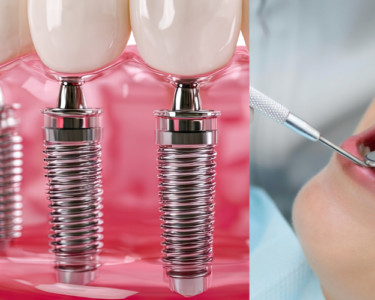
The main difference between All-on-4 vs All-on-6 implants is the number of dental implants used to support one complete upper or lower arch of replacement teeth. All-on-4 uses four implants per arch, while All-on-6 uses six.
All-on-6 is not automatically better simply because it uses two additional implants. All-on-4 is also not automatically the cheaper or simpler choice for every patient. The right option depends on the available jawbone, implant positions, bite pressure, gum health, restoration design, medical history, and the findings of a full dental assessment.
Both approaches may be considered for patients who have many missing, damaged, or failing teeth and need a full-arch replacement. Treatment should be selected according to clinical suitability rather than the name of the procedure alone.
Medical note: This page provides general dental education for people in Dubai and the UAE. It does not replace a clinical examination, dental imaging or a personalised treatment plan from a qualified dental professional.
All-on-4 vs All-on-6 Implants at a Glance
The table below explains the general differences between these two full-arch implant concepts.
| Comparison | All-on-4 | All-on-6 |
|---|---|---|
| Number of implants | Four implants per arch | Six implants per arch |
| Area restored | One complete upper or lower arch | One complete upper or lower arch |
| Implant support points | Four support points | Six support points |
| Bone requirements | May sometimes be planned around available bone | Requires suitable bone and space for six implants |
| Treatment cost | May cost less in some cases | May cost more because two additional implants are used |
| Fixed replacement teeth | May support a fixed full-arch restoration | May support a fixed full-arch restoration |
| Bone grafting | May or may not be required | May or may not be required |
| Best option | Depends on clinical assessment | Depends on clinical assessment |
These are general differences. The number of implants alone does not determine whether treatment will be suitable or successful.
What Are All-on-4 Dental Implants?
All-on-4 treatment uses four dental implants to support a complete arch of replacement teeth. The treatment may be planned for the upper jaw, lower jaw or both jaws.
Instead of placing one implant for every missing tooth, four implants are placed in carefully planned positions to support a larger restoration.
How Four Implants Support a Full Arch
The implant positions are selected after reviewing the available jawbone, bite, surrounding anatomy, and intended design of the replacement teeth.
In some treatment plans, the back implants may be positioned at an angle to make use of available bone. This may help some patients avoid or reduce the need for additional bone treatment, but this is not possible or appropriate in every case.
After placement, the implants support a temporary or final full-arch bridge, depending on the treatment plan and the stability achieved during surgery.
Who May Be Considered for All-on-4?
All-on-4 may be discussed with patients who:
- have many missing teeth;
- have severely damaged or failing teeth;
- struggle with loose removable dentures;
- Need replacement of a complete upper or lower arch;
- have enough suitable bone for the planned implant positions;
- can maintain good oral hygiene around the replacement teeth;
- Are medically suitable for implant surgery.
A patient should not assume that All-on-4 is suitable based only on photographs, advertisements, or online price offers. A dentist needs to examine the mouth and review appropriate imaging first.
What Are All-on-6 Dental Implants?
All-on-6 treatment uses six implants to support one complete arch of replacement teeth. Like All-on-4, it can be planned for the upper jaw, lower jaw, or both.
The two additional implants provide extra support points across the arch, but they also require suitable jawbone and space for placement.
How Six Implants Support a Full Arch
The six implants are distributed across the jaw according to the available bone and the design of the final restoration. Once the implants have healed and become stable, they may support a fixed full-arch bridge.
The treatment may still involve temporary teeth, a healing period, and later placement of the final restoration.
Who May Be Considered for All-on-6?
All-on-6 may be discussed when:
- sufficient bone is available for six implant positions;
- The jaw has enough space for safe implant placement;
- The restoration design may benefit from additional support points;
- The dentist believes six implants are appropriate for the patient’s bite and treatment needs;
- The patient understands the cost, treatment stages, and maintenance responsibilities.
Using six implants does not guarantee a better result. Implant placement, bone quality, bite control, healing, restoration design, and long-term maintenance are also important.
What Is the Main Difference Between All-on-4 and All-on-6?
The clearest difference is that All-on-4 uses four implants per arch and All-on-6 uses six. However, the treatment decision involves more than simply choosing a number.
Number and Position of Implants
All-on-4 relies on four planned implant positions to support the replacement arch. All-on-6 provides two additional support points.
The dentist must consider where each implant can be placed safely. Important factors may include bone width, bone height, sinus position in the upper jaw, nerve position in the lower jaw, and the available space for the final teeth.
Distribution of Support
Six implants may distribute support over more points than four implants. However, this does not mean that All-on-6 is always required.
Four well-positioned implants with suitable bone support may be appropriate for one patient, while another patient may benefit from six implants or a different treatment design.
The decision should be based on the complete clinical situation rather than a general claim that more implants are always better.
Is All-on-6 More Stable Than All-on-4?
All-on-6 provides two additional implant support points, which may be useful in some treatment plans. However, overall stability depends on more than the number of implants.
More Implants Do Not Automatically Mean Better Treatment
Factors that may affect implant stability and treatment performance include:
- quality and volume of jawbone;
- position and angle of each implant;
- initial implant stability;
- bite pressure;
- teeth grinding or clenching;
- design and material of the bridge;
- gum and implant hygiene;
- smoking;
- general health;
- regular maintenance.
A poorly planned six-implant treatment is not automatically better than a carefully planned four-implant treatment. The dentist should explain why a particular number of implants is recommended for your mouth.
Which Option Requires More Jawbone?
All-on-6 requires suitable bone and space for six implants. All-on-4 requires suitable support for four planned implant positions.
Bone Availability and Implant Planning
All-on-4 may sometimes be planned to make use of available bone in a way that reduces the need for additional grafting. However, bone grafting can still be required if the available jawbone is not sufficient.
All-on-6 may need more available implant sites because two additional implants must be placed safely.
A CBCT scan may be recommended to evaluate bone volume and the position of important structures before treatment. The scan does not decide the treatment by itself. It forms part of the dentist’s full assessment and planning.
All-on-4 vs All-on-6 Cost in Dubai
All-on-6 may cost more than All-on-4 because it involves two additional implants per arch. However, the implant count is only one part of the total treatment cost.
Why All-on-6 May Cost More
The final quote may also depend on:
- whether one or both arches are treated;
- consultations and scans;
- tooth extractions;
- bone grafting or sinus treatment;
- temporary replacement teeth;
- implant components;
- surgical time;
- material used for the final bridge;
- laboratory charges;
- follow-up appointments;
- maintenance and future repairs.
Patients should confirm whether a quoted price is for one arch or both arches and whether it includes temporary and final teeth.
For a broader price breakdown, read our guide to full mouth dental implants cost in Dubai.
For information about single implants and general implant pricing, read dental implant cost in Dubai.
Is the Treatment Timeline Different?
All-on-4 and All-on-6 generally follow similar treatment stages, but the exact timeline depends on the condition of the teeth, gums, and jawbone.
Typical Treatment Stages
The process may include:
- consultation and oral examination;
- X-rays or CBCT imaging;
- treatment planning;
- removal of failing teeth, if needed;
- gum or infection treatment;
- bone grafting, if needed;
- implant placement;
- fitting temporary teeth, when suitable;
- healing and implant integration;
- fitting the final full-arch restoration;
- follow-up care.
The use of six implants does not always mean that treatment will take longer. The timeline depends more on healing needs, extra procedures, and the overall complexity of the case.
Read more about how long the dental implant process takes.
Can All-on-4 or All-on-6 Be Completed in One Day?
Some clinics describe these treatments as same-day teeth or teeth in a day. Selected patients may receive temporary replacement teeth on the day of implant placement or shortly afterwards.
Same-Day Teeth May Be Temporary
Receiving temporary teeth quickly does not mean that the entire implant process, healing, and final restoration are completed in one day.
The implants still need time to heal in the jawbone. The temporary bridge may also have restrictions while healing takes place. The final bridge is generally planned after the dentist confirms that the implants and surrounding tissues are ready.
Immediate temporary teeth may not be suitable when:
- The implants do not achieve enough initial stability;
- significant bone grafting is required;
- active infection is present;
- bite pressure cannot be controlled;
- The patient has health or healing concerns;
- The dentist believes staged treatment is safer.
Patients should ask whether an advertised same-day package includes temporary teeth, final teeth, or both.
What Are the Possible Risks of All-on-4 and All-on-6?
Like other implant procedures, both treatments involve possible risks and complications. A dentist should explain the risks that apply to the individual patient before consent is given.
Implant and Healing Complications
Possible problems may include:
- infection;
- delayed healing;
- failure of an implant to integrate with the bone;
- movement or loss of an implant;
- bone loss around an implant;
- gum inflammation;
- discomfort or swelling after surgery;
- nerve or sinus complications in certain cases;
- loosening or damage to restoration components;
- wear or fracture of temporary or final teeth;
- Difficulty cleaning beneath the bridge.
These problems do not happen to every patient, but they should be discussed honestly before treatment.
Maintenance Is Still Required
All-on-4 and All-on-6 replacement teeth still require daily cleaning and regular dental care.
Patients may need to clean:
- around each implant;
- along the gum line;
- beneath the full-arch bridge;
- around spaces recommended by the dentist.
Special brushes, flossing aids, or water-based cleaning devices may be suggested. Professional maintenance appointments are also important for checking the implants, gums, bite, and restoration.
Are All-on-4 or All-on-6 Implants Worth the Cost?
Either treatment may be worth considering for a suitable patient who wants a more stable full-arch tooth replacement and understands the treatment, cost, and maintenance involved.
Treatment Value Depends on Suitability
Potential benefits may include:
- greater stability than a loose removable denture;
- replacement of a complete arch of missing teeth;
- improved chewing comfort for some patients;
- a fixed restoration in suitable cases;
- Improved confidence in speaking or smiling.
However, treatment also involves surgery, healing, higher initial cost, and long-term maintenance. Dentures or another treatment may remain more appropriate for some people.
Read our detailed guide on whether dental implants are worth the cost.
All-on-4 and All-on-6 Versus Dentures
Traditional full dentures are removable. All-on-4 and All-on-6 generally use implants to support a full-arch restoration, which may be fixed by the dentist.
Dental bridge versus implant
Many patients compare a dental bridge versus an implant when looking for a tooth replacement option. A dental bridge fills the gap by attaching to neighboring teeth, while a dental implant replaces the missing tooth from the root up by integrating with the jawbone. Although bridges can be less expensive initially, implants are often preferred for their durability, natural appearance, and ability to support long-term oral health.
Fixed and Removable Treatment Differences
A fixed implant bridge may feel more secure than a traditional removable denture for some patients. However, it still needs careful cleaning beneath the bridge and regular professional maintenance.
Dentures may be less costly initially and do not always require implant surgery. They may remain suitable when bone condition, health, budget, or personal preference makes implant treatment less appropriate.
For a broader denture comparison, read partial dentures vs full dentures.
What if Infection or Gum Disease Is Present?
Active infection, untreated gum disease, and poor oral hygiene may need attention before full-arch implant treatment begins.
Dental Problems Should Be Assessed First
A dentist may need to determine:
- which teeth can still be saved;
- whether infected teeth need treatment or removal;
- whether gum disease is controlled;
- whether bone loss is present;
- Whether the patient can maintain the final restoration.
Symptoms such as pain, swelling, pus, fever, or a persistent bad taste should not be ignored.
Read how to tell if a tooth is infected for common warning signs.
Questions to Ask Before Choosing All-on-4 or All-on-6
Ask for a written treatment plan that explains why a particular option is being recommended.
Useful questions include:
- Why are four or six implants recommended for me?
- Is the quote for one arch or both arches?
- Which teeth, if any, can still be saved?
- Do I have enough jawbone for the planned implants?
- Will I need bone grafting or sinus treatment?
- Are temporary teeth included?
- When will the final teeth be fitted?
- What material will be used for the final bridge?
- How should I clean beneath the bridge?
- What maintenance appointments will I need?
- What could happen if one implant develops a problem?
- Are repairs or future replacement parts included?
- What other treatment options are suitable for me?
A clinician should be able to explain the recommendation, alternatives, likely timeline, possible risks, and complete cost without pressuring the patient into immediate treatment.
Frequently Asked Questions About All-on-4 vs All-on-6 Implants
What is the main difference between All-on-4 and All-on-6?
All-on-4 uses four implants to support one complete arch of replacement teeth. All-on-6 uses six implants. Suitability depends on the available bone, jaw anatomy, bite, restoration design, and individual treatment needs.
Is All-on-6 better than All-on-4?
Not automatically. Six implants provide additional support points, but four implants may be suitable for some patients. The better option is the one supported by proper examination, imaging, and treatment planning.
Does All-on-6 last longer than All-on-4?
The number of implants alone cannot guarantee how long treatment will last. Longevity may be affected by implant position, bone support, healing, bridge design, bite pressure, smoking, oral hygiene, and maintenance.
Which option costs more in Dubai?
All-on-6 may cost more because it uses two additional implants per arch. The full price also depends on scans, extractions, grafting, temporary teeth, final bridge material, and whether one or both arches are treated.
Can All-on-4 or All-on-6 be completed in one day?
Selected patients may receive temporary teeth on or shortly after implant placement. Healing and delivery of the final restoration usually require additional time. Same-day treatment is not suitable for every patient.
Do I need bone grafting?
Not every patient needs bone grafting. The need depends on the available jawbone and planned implant positions. Examination and appropriate imaging are needed before this can be confirmed.
Are All-on-4 and All-on-6 removable?
They commonly support a fixed full-arch bridge that is removed by a dental professional when necessary. Other implant-supported designs may be removable by the patient, so the treatment type should be confirmed before starting.
How do I clean under a full-arch implant bridge?
Cleaning may involve brushing, special floss, interdental brushes, or another device recommended by the dentist. The spaces beneath the bridge and around each implant need regular attention.
Final Thoughts on All-on-4 vs All-on-6 Implants
The main difference between All-on-4 and All-on-6 implants is the use of four or six implants to support one complete arch of replacement teeth. All-on-6 offers two additional support points, but that does not make it the correct option for every patient.
A treatment decision should be based on your jawbone, gum health, bite, medical history, restoration design, cost, and ability to maintain the replacement teeth. Before agreeing to treatment, ask for a clear explanation of why four or six implants are recommended, what the quote includes, and what alternatives are available.
The safest choice is not necessarily the treatment with the most implants or the lowest advertised price. It is the option supported by careful diagnosis, appropriate planning, and clear long-term maintenance instructions.