

 By
By Emergency root canal treatment may be needed when tooth pain becomes severe, swelling appears, pus develops, or an infected tooth begins to affect your sleep, eating, or daily life. Many people in Dubai wait because they hope the pain will settle, but dental nerve pain and infection can become worse when the cause is not treated.
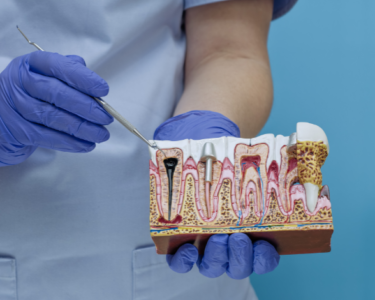
A root canal is done to remove infected or inflamed tissue from inside the tooth, clean the root canals, and seal the space to help save the natural tooth. The American Association of Endodontists explains that root canal treatment is usually needed when there is inflammation or infection in the roots of a tooth. During treatment, the pulp is removed, and the canals are cleaned, disinfected, shaped, and sealed.
This guide explains when a root canal becomes urgent, what symptoms to watch for, what happens during emergency root canal treatment, how costs may vary in Dubai, and when you should seek immediate help.
This content is for general education only. It does not replace a dental examination. If you have facial swelling, fever, trouble swallowing, trouble breathing, or swelling spreading toward the eye, neck, or under the jaw, seek urgent dental or medical care.
Quick Answer: When Is an Emergency Root Canal Needed?
An emergency root canal may be needed if you have severe tooth pain, pain when biting, swelling, pus, a gum pimple, fever, lingering sensitivity to hot or cold, or pain that keeps you awake at night.
Not every toothache needs a root canal. Some pain can come from a cavity, a cracked filling, a gum problem, sinus pressure, or a jaw issue. But if the tooth nerve is infected or dying, pain relief alone will not fix the problem. The tooth needs proper dental diagnosis and treatment.
The American Association of Endodontists lists severe pain while chewing or biting, pimples on the gums, cracked teeth, and lingering hot or cold sensitivity as possible signs that a root canal may be needed.
If you already have swelling, pus, or a gum boil, read our full guide on signs of infection after a root canal.
What Is an Emergency Root Canal?
An emergency root canal is an urgent dental treatment used when the pulp inside the tooth is infected, inflamed, or causing severe pain. The pulp is the soft tissue inside the tooth that contains nerves and blood vessels.
During emergency treatment, the dentist may open the tooth, remove infected or inflamed pulp, clean the canals, reduce pressure, drain infection if needed, and place a temporary or permanent filling.
In some cases, the dentist may only start the treatment during the emergency visit. You may need another appointment to complete the root canal and place the final restoration.
The main goals are to reduce pain, control infection, and save the tooth where possible.
Symptoms That May Need Emergency Root Canal Treatment
Severe Tooth Pain That Does Not Settle
Severe tooth pain is one of the most common reasons people need urgent dental care. The pain may feel sharp, deep, throbbing, or constant.
It may become worse when lying down, eating, drinking something hot or cold, or biting on the tooth. If the pain is disturbing your sleep or stopping you from eating normally, you should not ignore it.
For temporary relief steps while arranging care, read how to stop a toothache at home.
Pain When Biting or Chewing
Pain when biting can happen when infection or inflammation reaches the tissues around the tooth root. It can also happen if the tooth is cracked or if a deep cavity has reached the nerve.
If biting pressure causes sharp pain, the dentist may need to check whether the tooth needs a root canal, filling, crown, or another treatment.
If you are unsure whether your tooth needs a filling or a root canal, read do I need a root canal or filling.
Lingering Sensitivity to Hot or Cold
Short sensitivity can happen with gum recession, enamel wear, whitening products, or small cavities. But sensitivity that lingers after hot or cold food is removed can be a sign of nerve inflammation.
This can mean the pulp is damaged and may not heal on its own.
Swollen Gum or Gum Pimple
A pimple-like bump on the gum near the painful tooth may mean infection is draining from the root area. Some people call this a gum boil.
Even if the bump drains and the pain reduces for a short time, the infection may still remain. It should be checked by a dentist.
Facial Swelling
Swelling in the cheek, jaw, face, or under the eye can point toward infection. This may happen with a dental abscess or spreading inflammation.
If swelling is your main symptom, read facial swelling after a root canal.
Pus, Bad Taste, or Bad Smell
Pus, a foul taste, or a bad smell from the tooth area may mean infection is present. This can happen when an abscess drains into the mouth.
Do not try to drain it yourself. Dental treatment is needed to find and treat the source.
Fever or Feeling Unwell
Fever with tooth pain is a warning sign. Mayo Clinic lists fever, swelling in the face, cheek, or neck, tender lymph nodes, foul odor, and pain when biting or chewing as symptoms that may happen with a tooth abscess.
If fever comes with facial swelling, difficulty swallowing, or breathing difficulty, seek urgent medical care.
When Should You Go for Urgent Care?
Seek urgent dental or medical care if you have:
Facial swelling.
Swelling spreading toward the eye or neck.
Swelling under the jaw.
Fever.
Difficulty swallowing.
Difficulty breathing.
Difficulty opening your mouth.
Pus with severe pain.
Severe pain that does not improve.
Mayo Clinic warns that swelling in the face, cheek, or neck may lead to difficulty breathing or swallowing, and emergency care is needed if there is trouble breathing or swallowing.
These symptoms may mean the infection is spreading. Do not wait for them to settle on their own.
Emergency Root Canal vs Normal Root Canal
The main difference is timing and symptom severity.
A normal root canal may be planned after a dental checkup, X-ray, and diagnosis. An emergency root canal is done when pain, swelling, or infection needs quick care.
During an emergency visit, the dentist may first focus on pain relief, infection control, drainage, or opening the tooth to reduce pressure. The tooth may need another visit for full cleaning, sealing, and final restoration.
Can an Emergency Dentist Perform a Root Canal?
Yes, many emergency dentists can start or complete a root canal if the case is suitable.
However, not every emergency root canal is simple. Complex molars, curved canals, severe infection, retreatment cases, or failed previous root canals may need an endodontist.
A general dentist may handle many straightforward cases. An endodontist is a dentist with an advanced focus on root canal treatment.
You can read more here: what type of dentist performs root canals.
What Happens During Emergency Root Canal Treatment?
The dentist will usually start with a dental exam and X-ray. They need to confirm whether the pain is coming from the tooth nerve, gum tissue, a cracked tooth, an abscess, or another cause.
The emergency treatment may include:
Checking your symptoms and medical history.
Examining the painful tooth.
Taking a dental X-ray.
Giving local anesthesia.
Opening the tooth.
Removing infected or inflamed pulp.
Cleaning and disinfecting the canals.
Draining the infection if needed.
Placing medication inside the tooth if needed.
Sealing the tooth with a temporary or permanent filling.
Planning a crown or final restoration if required.
Mayo Clinic explains that root canal treatment may help eliminate infection and save the tooth by removing diseased pulp, draining an abscess if needed, and then filling and sealing the tooth. A crown may be used to strengthen the tooth, especially if it is a back tooth.
For the full procedure, read what happens during a root canal.
Will Pain Stop Immediately After an Emergency Root Canal?
Many patients feel relief after the infected nerve tissue is removed and pressure is reduced. But the tooth and surrounding tissues may stay sore for a few days.
This can happen because the bone and ligament around the root were already inflamed before treatment. The pain should slowly reduce, not become worse.
If pain becomes stronger, swelling appears, or symptoms return, the tooth should be checked again.
For healing details, read root canal recovery time.
Emergency Root Canal Cost in Dubai
Emergency root canal cost in Dubai depends on the tooth type, infection level, number of canals, clinic location, dentist experience, X-rays, and whether treatment is done during normal hours or as an urgent appointment.
Estimated ranges may include:
| Treatment Type | Estimated Cost in Dubai |
|---|---|
| Emergency consultation and X-ray | AED 150 to AED 500 |
| Front tooth root canal | AED 800 to AED 1,500 |
| Premolar root canal | AED 1,000 to AED 1,800 |
| Molar root canal | AED 1,500 to AED 3,000 |
| Root canal retreatment | AED 1,800 to AED 3,500+ |
| Crown after root canal | AED 1,000 to AED 3,500+ |
These are estimated ranges only. Emergency fees, drainage, medication, CBCT scan, or crown work may cost extra depending on the clinic.
For detailed pricing, read root canal cost in Dubai.
Does Insurance Cover Emergency Root Canal in Dubai?
Some UAE dental insurance plans may cover root canal treatment, but coverage depends on your policy.
You should check:
Network clinic rules.
Annual dental limit.
Waiting period.
Pre-approval requirement.
Emergency coverage.
Whether X-rays are covered.
Whether crown treatment is covered.
Whether specialist endodontist care is included.
Some plans may cover the root canal but not the crown. Some may cover only part of the treatment.
For more details, read is dental treatment covered by insurance in Dubai.
Can You Delay an Emergency Root Canal?
Delaying treatment can make the problem worse.
A tooth nerve infection may spread into the bone and form an abscess. Pain may become stronger. Swelling may develop. The tooth may become harder or more expensive to save.
Mayo Clinic states that a tooth abscess will not go away without treatment and that untreated infection can lead to serious, even life-threatening, complications.
If the tooth is still restorable, early care may help save it. If the tooth becomes badly damaged, weak, or cracked, extraction may be the only option.
Is It Root Canal Pain or Just a Filling Problem?
Not all tooth pain needs root canal treatment. Some pain comes from a cavity, cracked filling, high filling, gum recession, tooth sensitivity, sinus pressure, or jaw problems.
A dentist will check whether the tooth can be treated with a filling or whether the nerve is damaged.
If you are unsure, read do I need a root canal or filling.
What If You Have a Tooth Abscess?
A tooth abscess needs proper dental care. It may need drainage, root canal treatment, extraction, or antibiotics, depending on the case.
Antibiotics may help when the infection has spread, but they do not always remove the source inside the tooth. Mayo Clinic explains that antibiotics may be prescribed if infection spreads to nearby teeth, the jaw, or other areas, but treatment may also involve root canal treatment or extraction.
You can learn more here: tooth abscess symptoms.
What Not to Do During a Dental Emergency
Do not place aspirin directly on the gum.
Do not try to drain pus yourself.
Do not take leftover antibiotics.
Do not use sharp objects around the tooth.
Do not keep chewing on the painful side.
Do not wait if swelling is spreading.
Do not ignore a fever with tooth pain.
Home care may reduce pain for a short time, but it cannot remove infection inside the tooth.
How to Choose a Dentist for an Emergency Root Canal in Dubai
When choosing a dentist in Dubai for urgent root canal care, look for clear diagnosis, proper X-rays, infection control, transparent pricing, and follow-up planning.
Ask the clinic:
Is the dentist licensed in Dubai?
Can you take an X-ray today?
Is this a simple or complex root canal?
Do I need an endodontist?
Is the treatment completed today or over more visits?
Is the crown included?
What symptoms should I watch after treatment?
What should I do if swelling appears?
Dubai Health Authority publishes dental policies and guidelines, including endodontics and infection control in dentistry. DHA’s infection control guideline says dental clinics should prioritize infection prevention and follow standard precautions and infection prevention recommendations.
For more guidance, read how to choose the right dentist in Dubai.
Related Root Canal Guides
Signs of infection after a root canal
Facial swelling after a root canal
Root canal cost in Dubai
What happens during a root canal
Root canal recovery time
Do I need a root canal or filling
What type of dentist performs root canals
Tooth abscess symptoms
How to stop a toothache at home
How to choose the right dentist in Dubai Can an emergency dentist perform a root canal in Dubai?
How Many Appointments Does a root Canal take in Dubai?
What happens if you delay a root canal in Dubai?
How to Tell If a Tooth Is Infected?
How to Tell If a Tooth Is Infected
How to Tell If a Tooth Is Infected
FAQs About Emergency Root Canal Treatment in Dubai
How do I know if I need an emergency root canal?
You may need an emergency root canal if you have severe tooth pain, pain when biting, swelling, pus, fever, a gum pimple, or sensitivity that lingers after hot or cold exposure. A dentist must examine the tooth to confirm.
Can an emergency dentist do a root canal?
Yes, many emergency dentists can start or complete root canal treatment. Complex cases may need an endodontist.
Is severe tooth pain always a root canal problem?
No. Severe pain can also come from a cracked tooth, gum infection, high filling, sinus pressure, or jaw problems. A dental exam and X-ray are needed.
How much does emergency root canal cost in Dubai?
Emergency root canal cost in Dubai may range from AED 800 to AED 3,500+ depending on tooth type, infection level, number of canals, X-rays, clinic location, and whether specialist care is needed.
Will insurance cover emergency root canal treatment?
Some dental insurance plans may cover root canal treatment, but coverage depends on your policy, network, annual limit, waiting period, and pre-approval rules.
Can antibiotics stop the need for a root canal?
Antibiotics may help control spreading infection, but they usually do not remove the infected pulp inside the tooth. Dental treatment is often still needed.
Can I wait a few days with root canal pain?
If pain is mild and stable, you may schedule a prompt dental appointment. But severe pain, swelling, pus, fever, or trouble swallowing should not be delayed.
What happens if I delay emergency root canal treatment?
The infection may spread, pain may worsen, swelling may develop, and the tooth may become harder to save. In serious cases, dental infections can become medically urgent.
Is an emergency root canal painful?
Local anesthesia is used during treatment. Many patients feel relief after the infected tissue is removed, though soreness can remain for a few days.
Do I need a crown after an emergency root canal?
Many back teeth need a crown after root canal treatment because they handle heavy chewing pressure. The dentist will advise based on tooth strength and remaining structure.
How Long Will a Tooth Hurt Before the Nerve Dies?
Many people ask, “How Long Will a Tooth Hurt Before the Nerve Dies?” depends on the severity of the infection or tooth damage. The pain may last from a few days to several weeks. In some cases, the pain suddenly stops when the tooth nerve dies, but this does not mean the problem is cured. A dead nerve can still cause infection, swelling, and even tooth loss if left untreated.
Final Advice
Emergency root canal treatment should not be delayed when tooth pain is severe, swelling appears, pus develops, or fever starts. These symptoms may mean the tooth nerve is infected or the infection is spreading.
For Dubai patients, the safest step is to see a licensed dentist or endodontist quickly. Early care may reduce pain, control infection, and help save the natural tooth.